Last updated: 8 April 2026 | Published: 8 April 2026
The fastest way to start playing Magic: The Gathering in Australia is to download the free MTG Arena app, complete the in-app Color Challenge tutorial, and then visit a local game store like Good Games for a free "Learn to Play" session. From there, you can pick up a Magic: The Gathering Foundations Beginner Box, build your first paper deck, and start playing Friday Night Magic at your local store within a fortnight. This is the same path most Australian players take to go from zero to Friday Night Magic regular, and the whole journey can cost you less than AU$60 if you know where to buy.
This is the complete 2026 beginner's guide to playing MTG in Australia, written for the Australian market. We'll cover the free digital tutorial, how to find a local game store anywhere in Australia, which beginner products are actually worth buying in AUD, where to buy singles for the best price (we track 41 Australian retailers in real time on TCG Snoop), how to build your first deck, the formats Australian players actually play, and how to climb the competitive ladder all the way to the ANZ Super Series. For broader context on the current Australian market, see our weekly price spikes coverage.
Step 1. How Do I Start Playing Magic: The Gathering for Free?
The single best way to start playing Magic for free is the official MTG Arena app. According to Wizards' own onboarding data, the in-app Color Challenge tutorial walks new players through every core rule and card interaction in roughly 30 minutes, and the client is completely free to download on PC, Mac, iOS, and Android.
MTG Arena is the lowest-friction way to learn the game because the client handles every rule for you — turn order, the stack, triggered abilities, priority, and combat phases all happen automatically. You can finish the Color Challenge in a single sitting and walk away knowing how to play. After the tutorial, Arena gives you a stack of free starter decks across all five colours and a daily quest system that rewards you with packs and gold without spending a cent. For most Australian beginners, Arena is the first 20 to 40 hours of your journey into the game, and it costs nothing.
One Australia-specific tip: Arena runs on Wizards of the Coast's North American servers, so expect a 150–200ms ping from the east coast and 200–250ms from Perth. It's perfectly playable for casual matches and ranked Standard, but ladder grinders chasing Mythic rank in real time will notice the latency. Furthermore, Arena's in-game store charges in USD — at the current AU$1.58 to US$1 rate, a 50-pack bundle on the Arena store works out to roughly AU$110, which is one of the reasons we recommend starting with the free decks before spending any money.
Step 2. How Do I Find a Magic Local Game Store in Australia?
The fastest way to find a Magic store in Australia is the official Wizards Store and Event Locator at locator.wizards.com.
Australia has more than 200 WPN-certified stores spread across every state and territory, and almost all of them run a free weekly "Learn to Play Magic" session for newcomers. The dominant Australian chain is Good Games, with multiple stores across NSW, VIC, QLD, WA, SA, and the ACT — Good Games stores typically run a free Magic Academy on weekends, hand out free Welcome Decks to new players, and host Friday Night Magic every week. Other major Australian retailers worth checking include Card Merchant (Sydney), Mind Games (Melbourne and Perth), Gameology (online + retail), GUF, General Games (VIC), Cherry Collectables, The Gamesmen (Sydney), and Manaleak AU.
If you don't have a WPN store nearby, you're not stuck. Many Australian regional and community game stores still run casual Magic nights even without WPN certification, and the official Magic Australia subreddit and the Magic Australia Discord both maintain crowd-sourced lists of local play groups in smaller cities and towns. Reach out before you drive — most stores are happy to walk a complete beginner through their first game in person, and you'll usually leave with a deck someone has lent you for the night.
Step 3. Which Beginner Products Should Australian Players Buy?
The best Magic product for an Australian beginner in 2026 is the Magic: The Gathering Foundations Beginner Box, retailing between AU$59 and AU$79.
Foundations is the current "core set" replacement from Wizards of the Coast, and unlike previous beginner sets, every card in Foundations is legal in Standard and will remain legal for at least the next five years. That means the cards you learn with on day one are the same cards you'll be playing with at competitive Standard events two years from now. The Beginner Box itself is built around teaching: it includes pre-built decks with simple, transparent strategies, a step-by-step learn-to-play booklet, and reference cards for tricky rules. We're currently tracking the Foundations Beginner Box between AU$59 and AU$79 across our 41 tracked Australian stores on TCG Snoop, with the cheapest listings usually coming from Gameology, Good Games, and Pro Gamers and Collectables.
If the Beginner Box feels like too much commitment, the cheaper option is the Magic: The Gathering Starter Kit, which costs roughly AU$25 to AU$35 and includes two ready-to-play 60-card decks plus codes to unlock both decks on MTG Arena. The Starter Kit is the easiest way to learn the game with one friend at a kitchen table — open the box, shuffle, and you're playing in five minutes. Both products are the same recommendation that Wizards of the Coast itself makes to new players, and both are stocked by every major Australian retailer.
Step 4. Where Should Australian Players Buy MTG Cards Online?
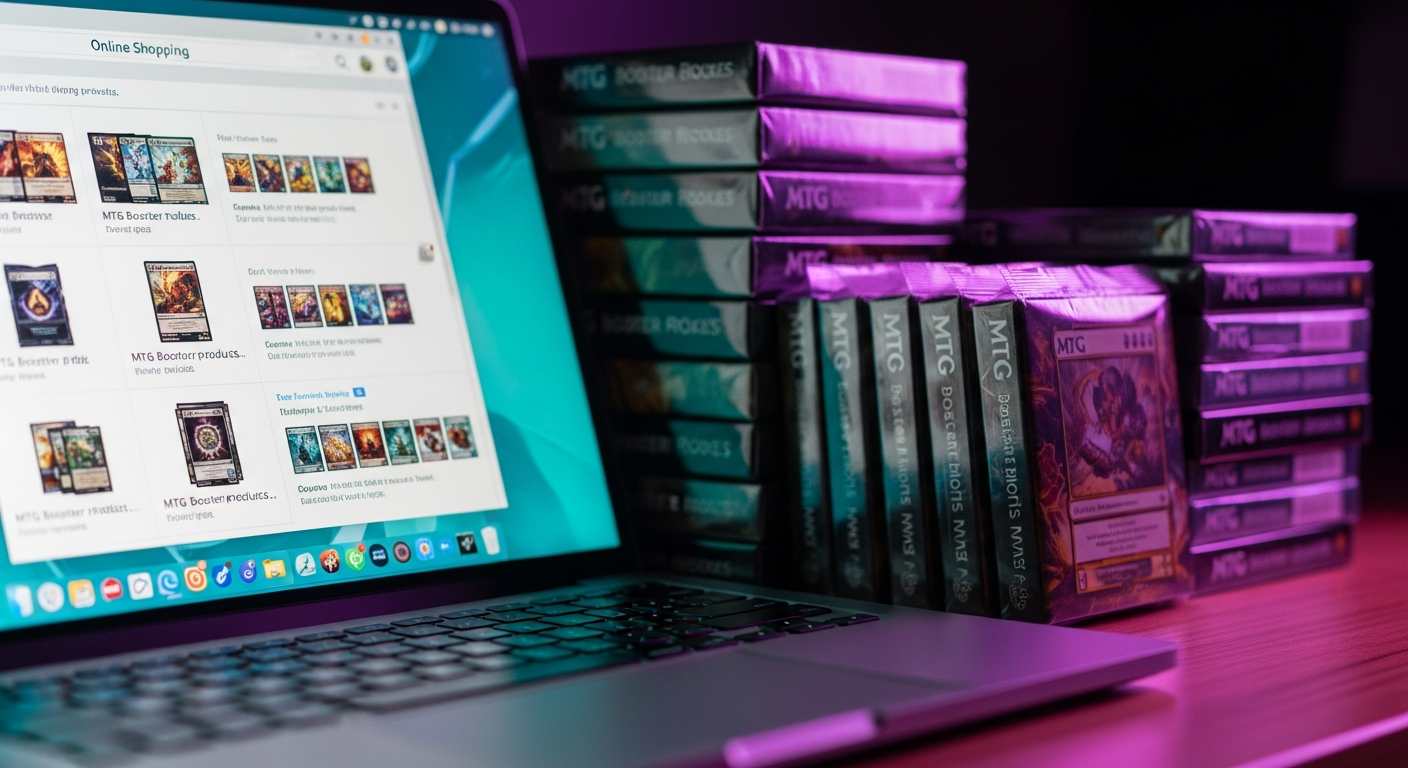
Australian players should buy singles from the cheapest Australian retailer at any given moment, and the easiest way is TCG Snoop's price comparison tool, which tracks 41 Australian retailers in real time.
The reason this matters is that AUD pricing on singles varies wildly between Australian stores — sometimes the same card is AU$8 at one retailer and AU$22 at another, on the same day. Stock turnover, reprint timing, and store-specific FX assumptions all push prices in different directions, and there's rarely one store that's cheapest on everything. We built TCG Snoop specifically to solve this — we pull live pricing from 41 Australian stores including Good Games, Mind Games, Card Merchant, GUF, General Games, Cherry Collectables, Manaleak AU, Gameology, and The Gamesmen multiple times per day, and the price comparison tool sorts every listing from cheapest to most expensive in AUD.
For booster boxes and sealed product, the same logic applies but the spread is smaller — AU$200 to AU$260 for a Standard set Play Booster box is a typical range. Avoid buying singles from overseas TCGPlayer or Card Kingdom listings unless you absolutely cannot find the card in Australia. Once you add international shipping, the GST low-value threshold, and the currency conversion fee, an "AU$8" card from a US seller often lands at your door costing AU$22 — and that's before the 2 to 4 week wait. Buy local, save money, and support the Australian Magic community.
Step 5. How Do I Build My First Magic Deck in Australia?
The simplest way to build your first Magic deck is to start with a preconstructed deck and swap cards in and out as you learn. According to EDHREC and MTGGoldfish deck-building guides, brand-new players who try to brew a deck from scratch on day one almost always end up with a deck that doesn't function — there are too many subtle rules around mana curves, lands, and synergies for a beginner to get right without practice.
For your first weeks of paper play, just use the precons. Foundations gives you ten of them in the Beginner Box, and any modern Commander precon (the four pre-built Commander decks released with each set) is a perfectly playable starting point in the Commander format. Once you've played 5 to 10 games with a precon, you'll start to notice the cards you wish you had more copies of and the cards you never want to see again — that's the moment to start tweaking. For Commander beginners specifically, our best Commander precons in Australia for 2026 guide ranks the current precons by AUD price and beginner-friendliness across 41 Australian retailers.
When you're ready to upgrade, the workflow is simple: pick a card you want, look it up on TCG Snoop, and order from whichever Australian retailer has it cheapest in stock. Most precon upgrades cost AU$5 to AU$30 per card, and a fully tuned precon usually costs AU$80 to AU$150 in upgrades on top of the AU$60 to AU$80 base precon price. Whether you're chasing a powerful enchantment, a new commander, or a sleeper combo piece, the Australian secondary market has improved enormously over the past five years and you'll rarely need to import.
Step 6. Which Format Should an Australian Beginner Play?
The best Magic format for an Australian beginner is Commander (also called EDH). Commander is a 100-card singleton multiplayer format built around a "commander" creature that anchors your deck's strategy, and it's specifically designed for casual, social play.
The reason Commander dominates Australian casual play is that it scales naturally to whatever group you're playing with — three players, four players, six players, the format works for all of them, and games typically run 60 to 90 minutes which is the sweet spot for an evening at an LGS. Commander precons (the AU$60 to AU$80 four-deck packages Wizards releases with each set) make it incredibly easy to get started without building a deck from scratch, and almost every Good Games, Card Merchant, and independent Australian LGS runs a casual Commander night at least once a week.
If you prefer 1-on-1 play, the other formats Australian players actually play are Standard (the rotating constructed format used at WPN tournaments and the format most beginners learn first after Arena), Modern (a non-rotating eternal format popular at competitive REL events — see our latest Modern price spike coverage for what's currently meta), and Pioneer (a middle-ground format between Standard and Modern, played mainly at larger Australian competitive events). Avoid Legacy and Vintage as a beginner — both formats include extremely expensive Reserved List staples that can run AU$1,000+ per card, and there are very few Australian players who own complete Legacy or Vintage decks.
Step 7. How Do You Start Playing Competitive Magic in Australia?
The competitive Magic pathway in Australia runs from Friday Night Magic to Store Championships to ANZ Super Series Qualifiers to the Pro Tour. Each step up the ladder is open to anyone who finishes well enough at the level below, and the entire pathway is run by Wizards of the Coast through the WPN store network.
Friday Night Magic (FNM) is the entry point. Almost every WPN-certified Australian store runs an FNM event every week — typically Standard, Draft, or Commander, with entry fees between AU$10 and AU$25 and prize support in the form of promo cards, store credit, or booster packs. FNM is casual-competitive: it's serious enough to teach you how tournament Magic works, but relaxed enough that complete beginners can show up, lose every round, and still have a great time. After a few weeks of FNM, you can step up to Store Championships, which run quarterly, offer better prizes, and feed into the Australian regional circuit.
Above Store Championships, the major Australian competitive circuit is the ANZ Super Series, run by Wizards of the Coast for Australian and New Zealand players. The ANZ Super Series runs regional qualifiers in every Australian capital city throughout the year, with the top finishers from each qualifier earning invitations to the ANZ Super Series Finals — and from there, the top players earn invites to the international Pro Tour. Realistically, getting from Friday Night Magic to the Pro Tour takes several years of consistent competitive play, but the pathway is open to any Australian player willing to put in the games. For most players, the ANZ Super Series Regional Qualifiers are the natural ceiling — they're competitive enough to be exciting, the venues often host casual side events for all skill levels, and they're accessible from every state.
Australian MTG Community Resources and Conventions
The Australian Magic community is small enough to feel friendly but large enough to find a play group anywhere in the country. The biggest hub is the official Magic Australia subreddit (r/mtgAU), which posts new-set discussion, deck-building help, store recommendations by city, and trade threads. The Magic Australia Discord servers — there are several, organised by state — run daily voice chats, deck-tech discussions, and casual Arena play sessions for Australian time zones.
Beyond online communities, the two biggest annual events to put on your calendar are PAX Aus (held every October in Melbourne) and Oz Comic-Con (held in Sydney, Melbourne, Brisbane, and Adelaide throughout the year). Both events run dedicated "Magic Academy" booths staffed by Wizards of the Coast and partner stores, where complete beginners can sit down with an experienced player, learn the game in 30 minutes, and walk away with a free Welcome Deck. PAX Aus in particular has become the unofficial annual gathering point for the Australian Magic community — most major Australian content creators, judges, and store owners attend, and the side events are some of the best beginner-friendly tournaments of the year.
For online resources and content specifically focused on the Australian market, TCG Snoop publishes weekly Australian price spike coverage, store reviews, and beginner guides — see our weekly price spike coverage and our Commander precon rankings for current AUD market context. The official Wizards of the Coast news feed at magic.wizards.com covers global MTG news, and Scryfall remains the gold-standard MTG card database with full rulings, prices, and search filters.
The Bottom Line — Your First 30 Days Playing MTG in Australia
Here's the realistic 30-day plan for any Australian beginner who wants to go from never having played Magic to playing competitive Friday Night Magic at a local store:
- Week 1: Download MTG Arena. Complete the Color Challenge tutorial. Play 10 games on the free starter decks.
- Week 2: Use the Wizards Store Locator at locator.wizards.com to find your nearest WPN store. Visit on a weekend "Learn to Play Magic" session — most are free and most stores will lend you a deck.
- Week 3: Buy a Foundations Beginner Box (AU$59 to AU$79) or a Commander precon (AU$60 to AU$80). Compare prices on TCG Snoop across our 41 tracked Australian stores before you order.
- Week 4: Show up to Friday Night Magic at your local store with your new deck. Lose every round, have a great time, and come back the next week.
Total cost: roughly AU$60 to AU$110 in your first month, and you'll be a real Magic player on the other side. From there, the pathway is wide open — casual Commander nights, FNM, Store Championships, the ANZ Super Series, and (if you really catch the bug) the Pro Tour. Australian Magic is in great shape in 2026, the LGS network is denser than ever, and the secondary market for singles is more competitive than it's ever been. There's never been a better time to start.
Frequently Asked Questions About Playing MTG in Australia
Is MTG Arena free in Australia?
Yes, MTG Arena is completely free to download and play in Australia. The client is free on PC, Mac, iOS, and Android, every new player gets a stack of free starter decks across all five colours, and you can play unlimited matches without ever spending a cent. The only thing you can pay for is cosmetics, extra packs, and event entry — and you can ignore all of those as a beginner.
How much does it cost to start playing MTG in Australia?
You can start playing MTG in Australia for AU$0 by sticking entirely to MTG Arena, or for roughly AU$60 to AU$110 if you want to play paper Magic at a local store. The Foundations Beginner Box runs AU$59 to AU$79, the Magic: The Gathering Starter Kit runs AU$25 to AU$35, and Friday Night Magic entry fees at most Australian stores are AU$10 to AU$25 per event.
Where can I play Magic: The Gathering in Australia?
You can play Magic: The Gathering at any of the 200+ WPN-certified stores spread across every Australian state and territory. The largest chain is Good Games, with stores in NSW, VIC, QLD, WA, SA, and the ACT. Other major Australian venues include Card Merchant (Sydney), Mind Games (Melbourne and Perth), GUF, General Games (VIC), and The Gamesmen (Sydney). Use locator.wizards.com to find the closest WPN store to your postcode, or browse our Australian store directory and reviews.
What is the best Magic product for a complete beginner?
The best Magic product for a complete beginner in Australia is the Magic: The Gathering Foundations Beginner Box. It includes ten ready-to-play 60-card decks, a step-by-step learn-to-play booklet, and reference cards for the trickier rules — and every card in it is Standard-legal until at least 2031. We're tracking the Foundations Beginner Box between AU$59 and AU$79 at Australian retailers on TCG Snoop.
What format should a new Australian MTG player learn first?
A new Australian MTG player should learn Standard first on MTG Arena (where the free starter decks are Standard-legal), then move to Commander once they start playing in person at a local game store. Commander is the most-played casual format at every major Australian LGS, the games are social and 60 to 90 minutes long, and the precon decks are the easiest entry point into paper Magic for any beginner.
Are Magic cards cheaper in Australia or overseas?
Magic cards are usually cheaper to buy from Australian retailers than to import from overseas, once you account for international shipping, GST, and currency conversion. A card listed at "US$8" on TCGPlayer typically lands in Australia at AU$20 to AU$25 after fees and shipping, while the same card at the cheapest Australian retailer often costs AU$12 to AU$16. TCG Snoop's price comparison tool tracks 41 Australian retailers in real time so you can always see the cheapest live AUD price on any card.
How do I find Friday Night Magic in Australia?
You can find Friday Night Magic events in Australia by using the official Wizards of the Coast Store and Event Locator at locator.wizards.com, which lists every WPN-certified store and their weekly event schedule. Almost every Australian WPN store runs FNM every week, with entry fees between AU$10 and AU$25 and prize support in the form of promo cards, store credit, or boosters.
Is the ANZ Super Series open to beginners?
The ANZ Super Series is open to any Australian or New Zealand player who registers and pays the entry fee, but it's a competitive REL (Regular Enforcement Level) event aimed at intermediate to advanced players. Beginners are welcome to enter, but the realistic pathway for most new Australian players is Friday Night Magic for several months, then Store Championships, and only then ANZ Super Series Regional Qualifiers once you're consistently winning at store level.
Do Australian stores run Learn to Play sessions?
Yes, almost every WPN-certified Australian MTG store runs a free "Learn to Play Magic" or "Magic Academy" session at least once a week, usually on a weekend afternoon. Good Games stores in particular are known for free welcome sessions and free Welcome Decks for new players. Call your local store before you visit to confirm the schedule.
How accurate are TCG Snoop's Australian price comparisons?
TCG Snoop pulls live pricing from 41 Australian retailers including Good Games, Mind Games, Card Merchant, General Games, GUF, Cherry Collectables, Manaleak AU, Gameology, and The Gamesmen multiple times per day. MTG prices on the site are typically within minutes of the source retailer's own listings, which makes us the most accurate AUD price tracker in the country.
Sources: Wizards of the Coast official MTG Arena onboarding documentation, the Wizards Play Network store locator at locator.wizards.com, MTGGoldfish and EDHREC deck-building guides, and live AUD pricing from 41 TCG Snoop-tracked Australian retailers as of 8 April 2026. We're not affiliated with Wizards of the Coast — Magic: The Gathering, MTG, and all related trademarks are property of Wizards of the Coast, LLC, a subsidiary of Hasbro, Inc. Used here for informational and commentary purposes only.